glossary
Spacing effect: definition
what is spacing effect?
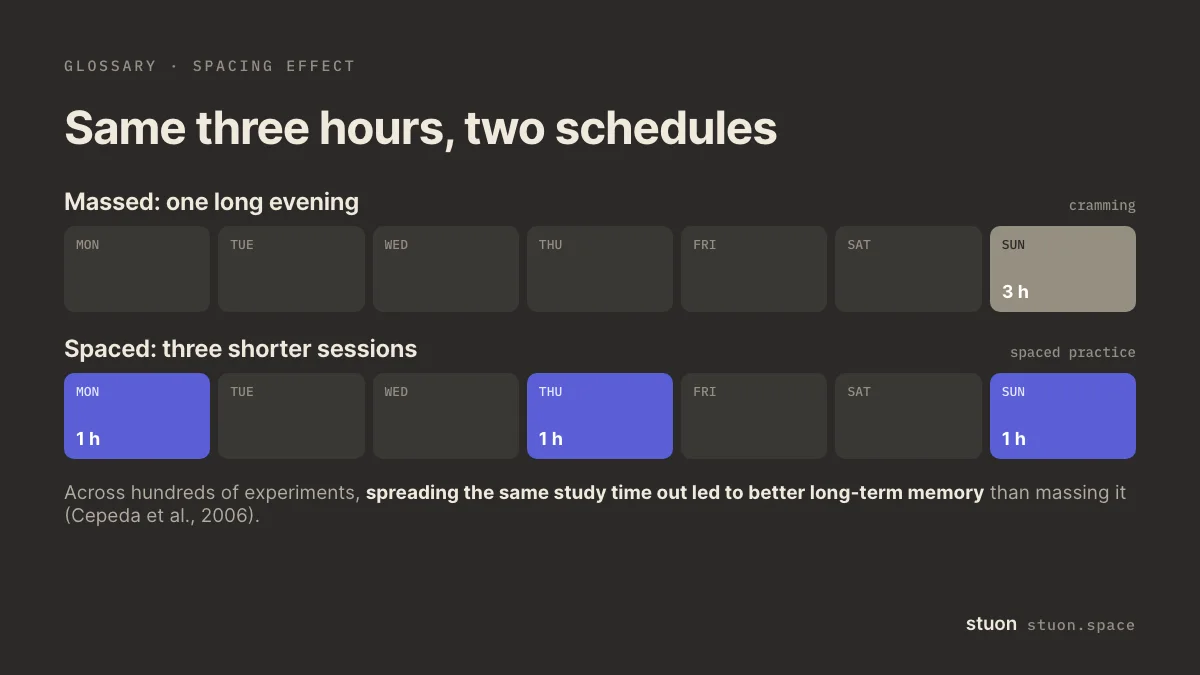
The spacing effect is the finding that studying the same material in several sessions spread over time leads to better long-term memory than studying it for the same total time in one block. It is the research basis of spaced repetition.
by Vusal Imranli updated 10 Oct 20262 min read
also called distributed practice effect, spaced practice
Definition and research
A review of hundreds of experiments on verbal learning found that spaced study beat massed study across a wide range of materials and delays (Cepeda et al., 2006). A later study found that the best gap between sessions grows with how long you need to remember: for a test months away, gaps of weeks worked better than gaps of a day (Cepeda et al., 2008).
What it means for studying
Split your study time for a topic into several sessions on different days, and test yourself in each one. A spaced repetition schedule or Leitner boxes build the gaps in for you. The opposite pattern is massed practice.
A common misconception
Spacing does not mean studying less. It means the same hours in a different shape. It also feels harder, because you have forgotten a little between sessions. That small struggle is part of why it works; see desirable difficulties.
Full guide: Spaced repetition. Review material at growing intervals so you remember it for longer.
Frequently asked questions
How far apart should study sessions be?
Longer gaps suit longer retention goals. For an exam weeks away, review after a day, a few days and a week or more.
Is the spacing effect the same as spaced repetition?
The spacing effect is the research finding. Spaced repetition is a study method built on it.
Sources
Related terms and guides
Practice it, then keep a record
Stuon has a timer, a blurting space and flashcards, and it logs the time you spend on each.
Track this in StuonAdd to Chrome, freeor use the free version without an account