blog
Study tips & practical guides
Deep dives on how to study: exam preparation, memory, focus, sleep and note-taking. Each post cites its sources and links to a free tool you can try. For short method overviews, see the study resources.
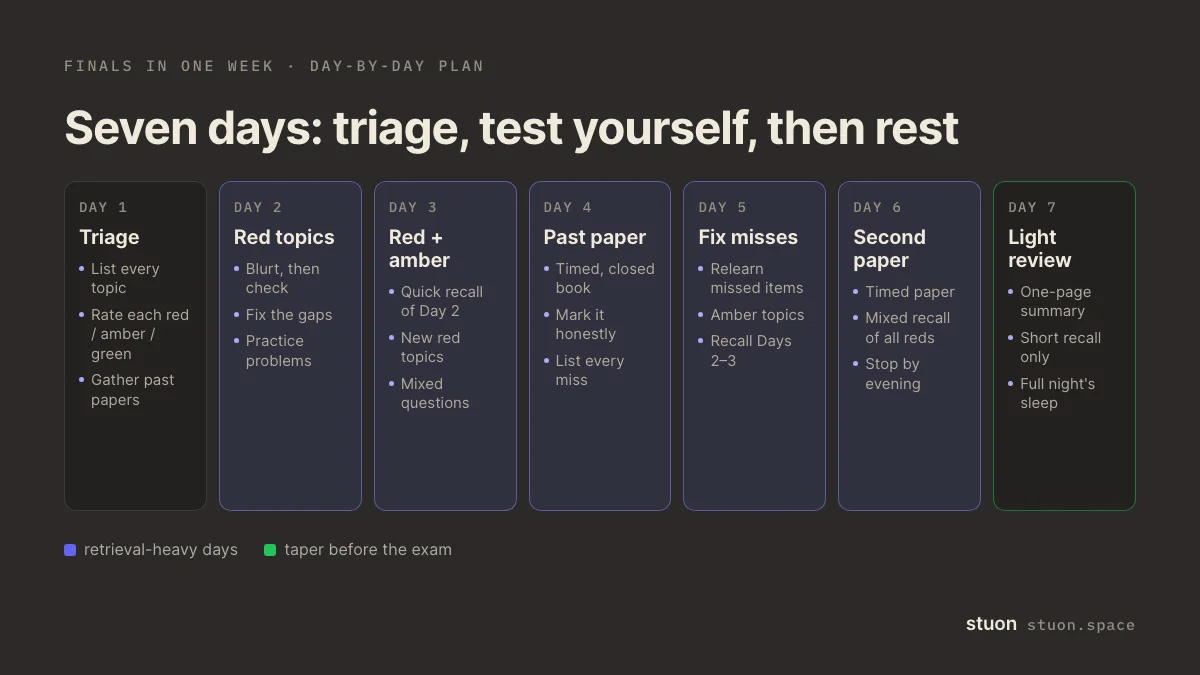 How to Study for Finals in One Week: A Day-by-Day PlanA seven-day plan for finals: triage your topics, test yourself instead of rereading, use past papers, and stop in time to sleep before the exam.
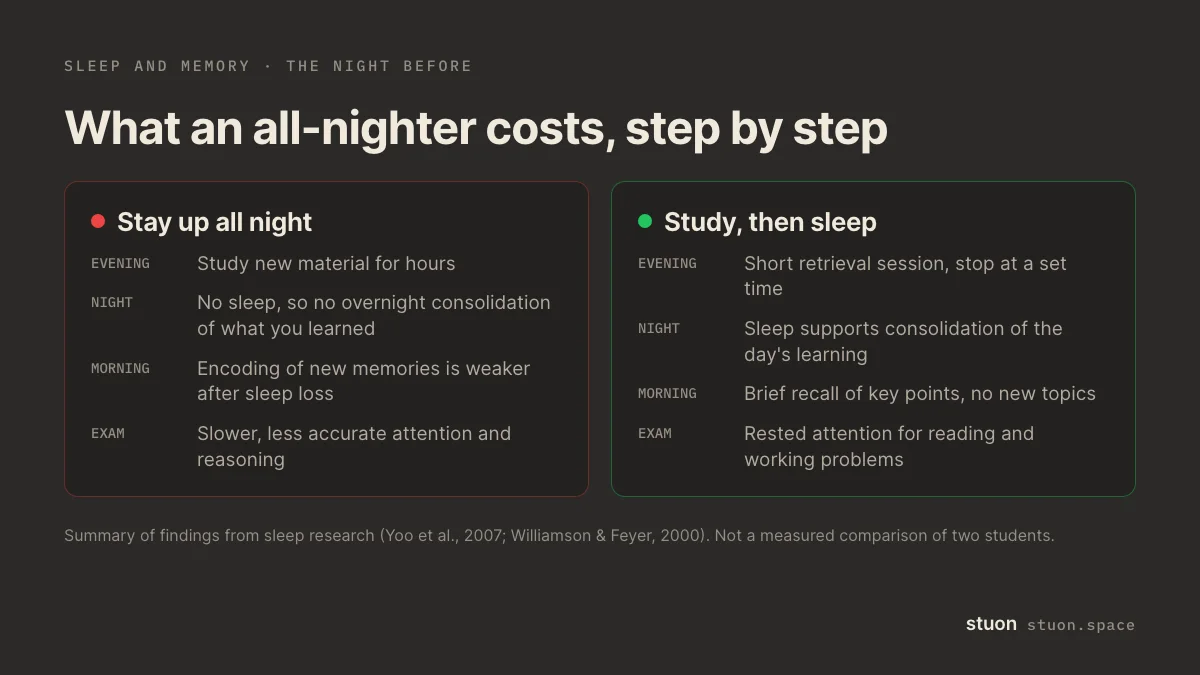 Why All-Nighters Backfire: Sleep, Memory and Exam ResultsWhat research says about all-nighters: how sleep loss weakens learning and next-day thinking, and how to plan the night before an exam instead.
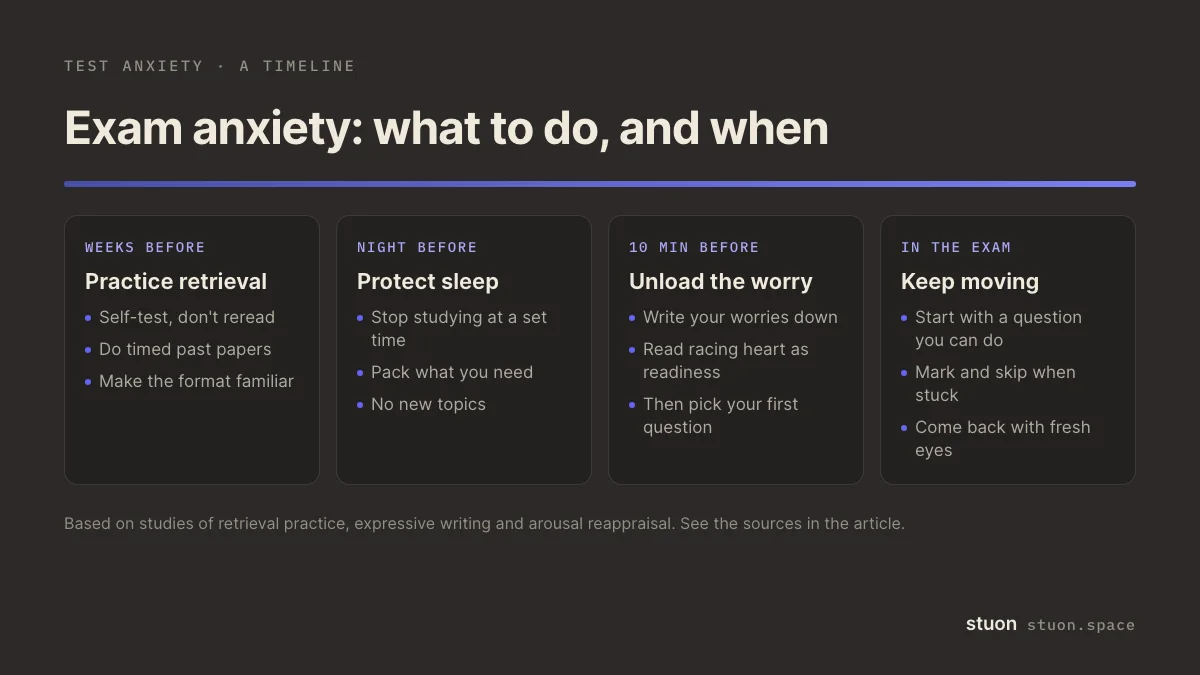 Exam Anxiety: What Helps Before and During the TestEvidence-based ways to handle exam anxiety: practice with self-testing, write out your worries, reframe nerves, and a plan for when you blank in the exam.
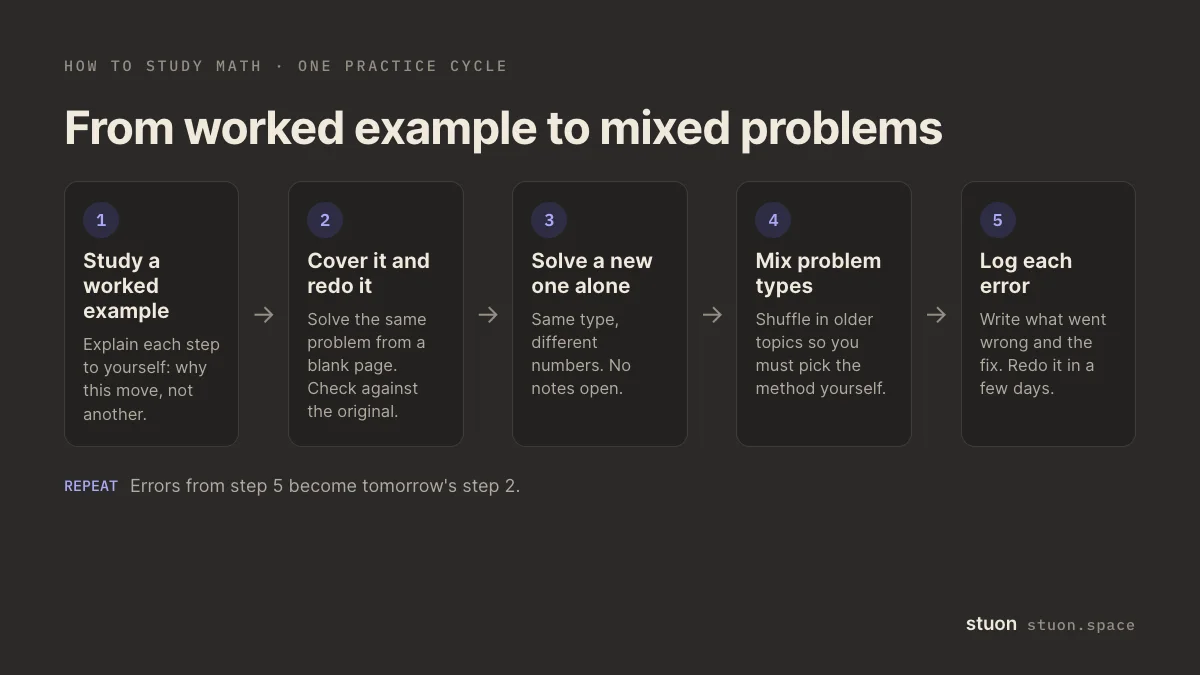 How to Study Math: Practice That SticksHow to study math so it lasts: learn from worked examples, solve from a blank page, mix problem types, and keep an error log you actually revisit.
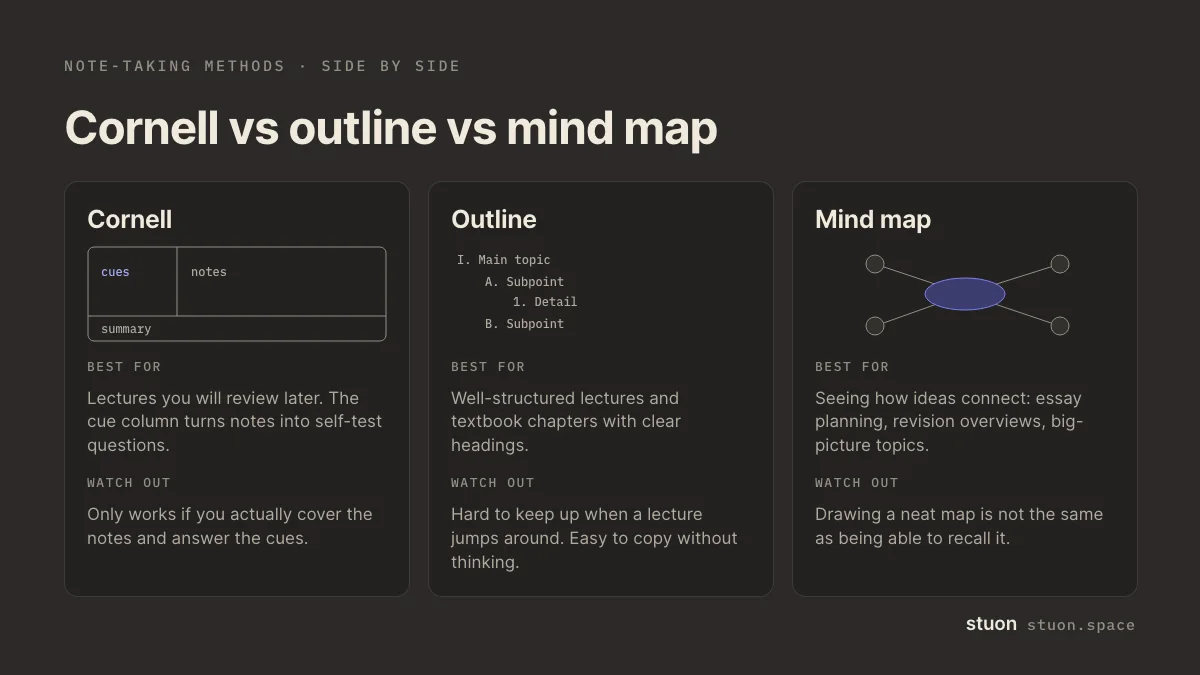 Cornell vs Outline vs Mind Map: Which Note-Taking Method?How Cornell notes, outlines and mind maps work, what each is good for, and what the research says about turning any of them into real learning.
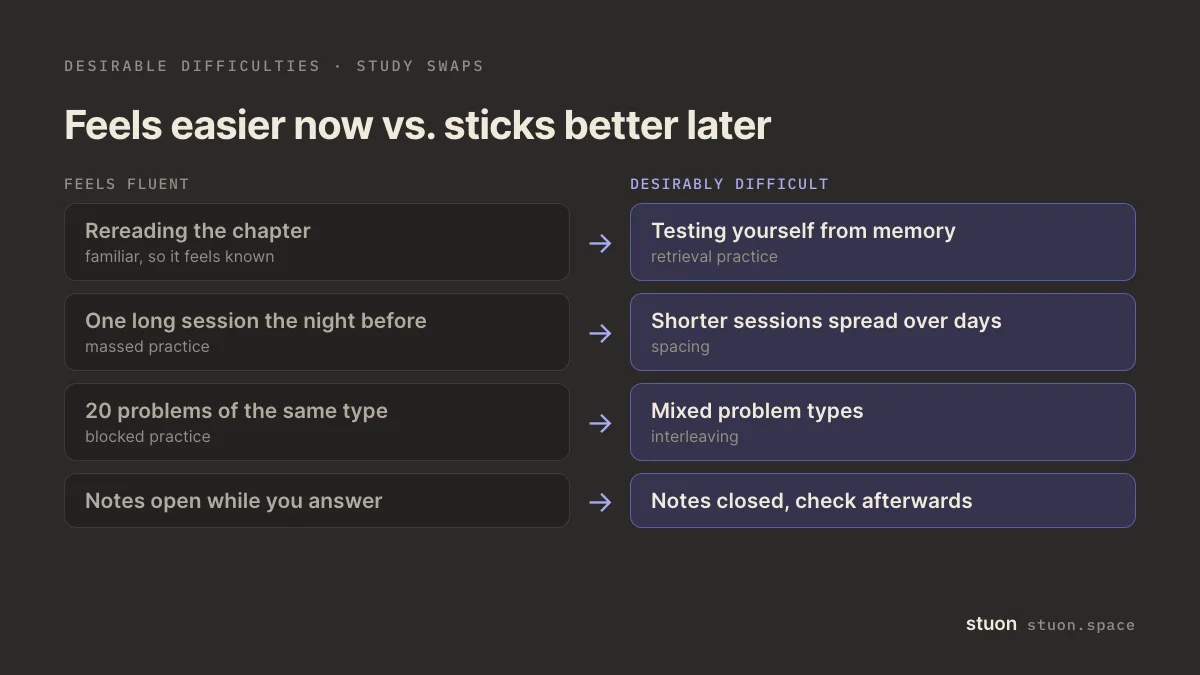 Desirable Difficulties: Why Harder Studying SticksWhat desirable difficulties are, the four with the best evidence, and how to tell useful struggle from wasted effort, with a worked study week.
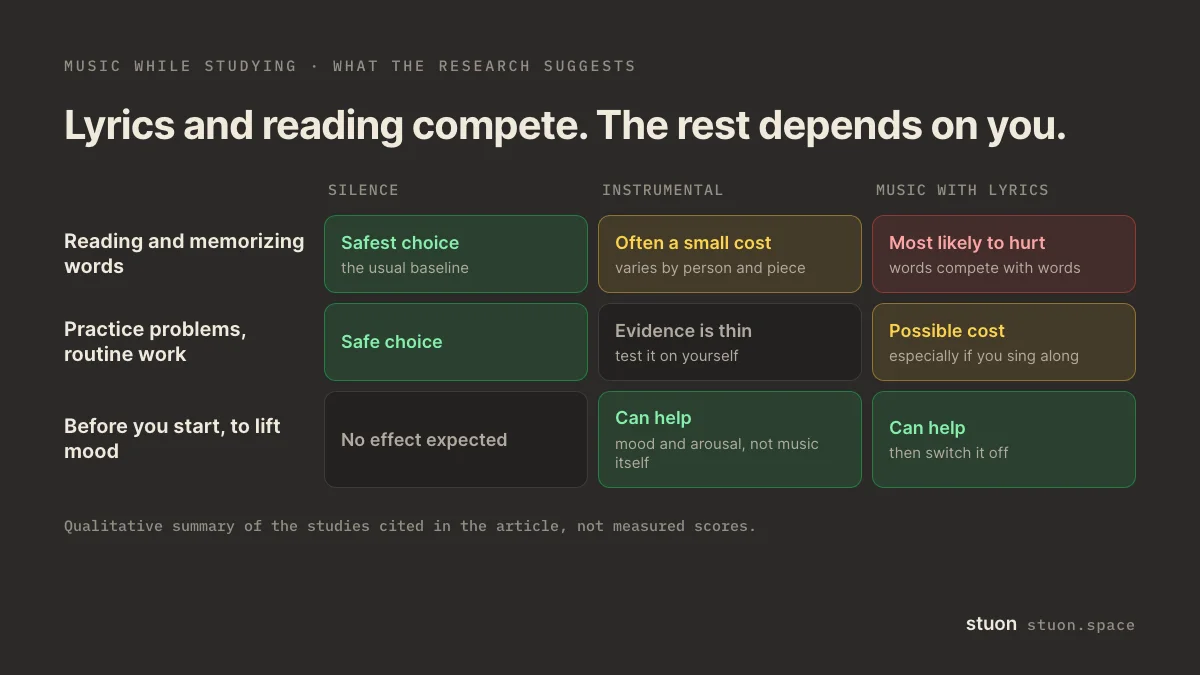 Is Music While Studying Good or Bad? What Research SaysDoes music help or hurt studying? What studies show about lyrics, instrumental music and mood, plus a one-week test to check your own setup.
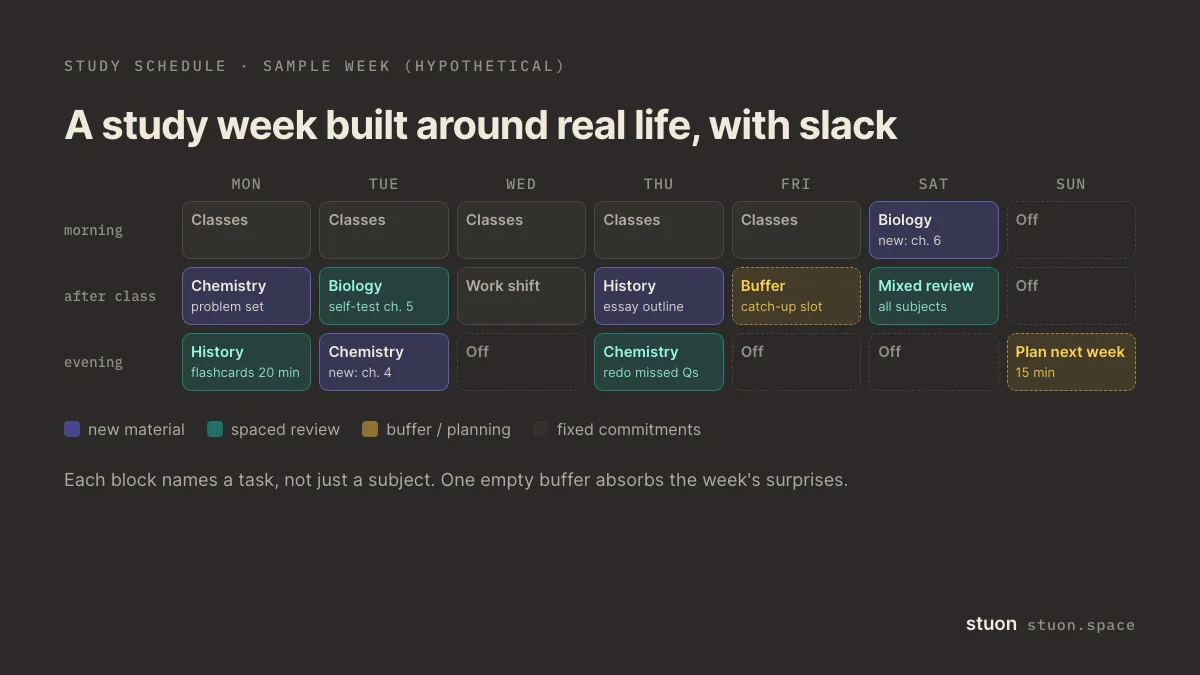 How to Make a Study Schedule You'll Actually KeepBuild a study schedule around the week you really have: fixed blocks first, realistic hours, named tasks, spaced reviews and a buffer.
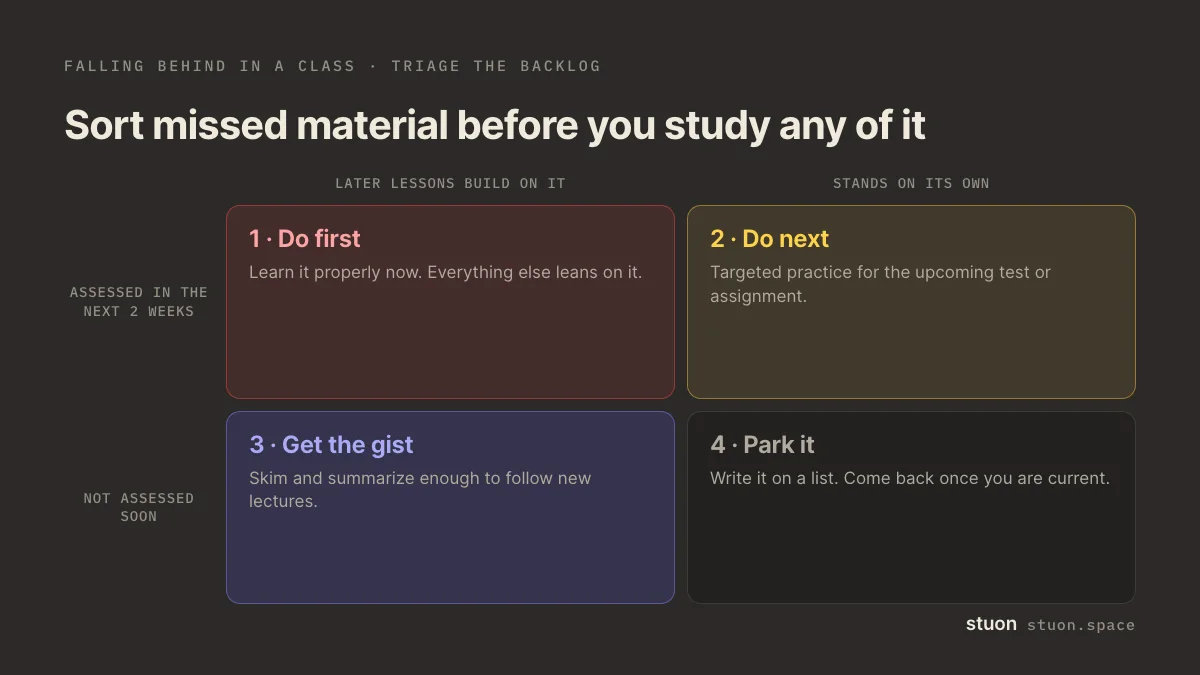 How to Catch Up After Falling Behind in a ClassBehind in a class? Stop the gap growing, triage the backlog by what is assessed soon and what later topics need, then catch up in about two weeks.
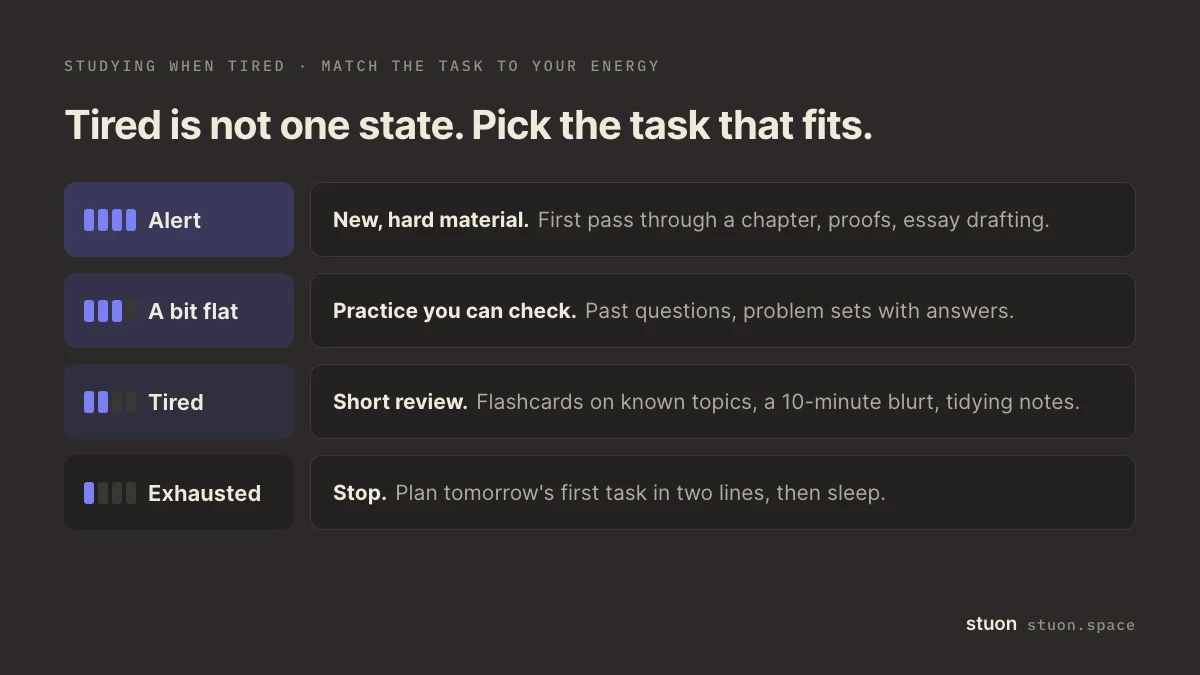 How to Study When You're Tired (and When to Stop)What tiredness does to studying, which tasks still work when you're low on energy, how long to nap, and a 10-minute test for when to stop.
 How to Study With Friends Without Wasting the SessionWhen studying alongside friends helps, when it hurts, and how to set up a shared study session that keeps everyone working, in person or online.
 Blurting Method Mistakes: 8 Errors and How to Fix ThemThe most common blurting method mistakes, from blurting a whole unit at once to skipping the correction step, with a concrete fix for each one.
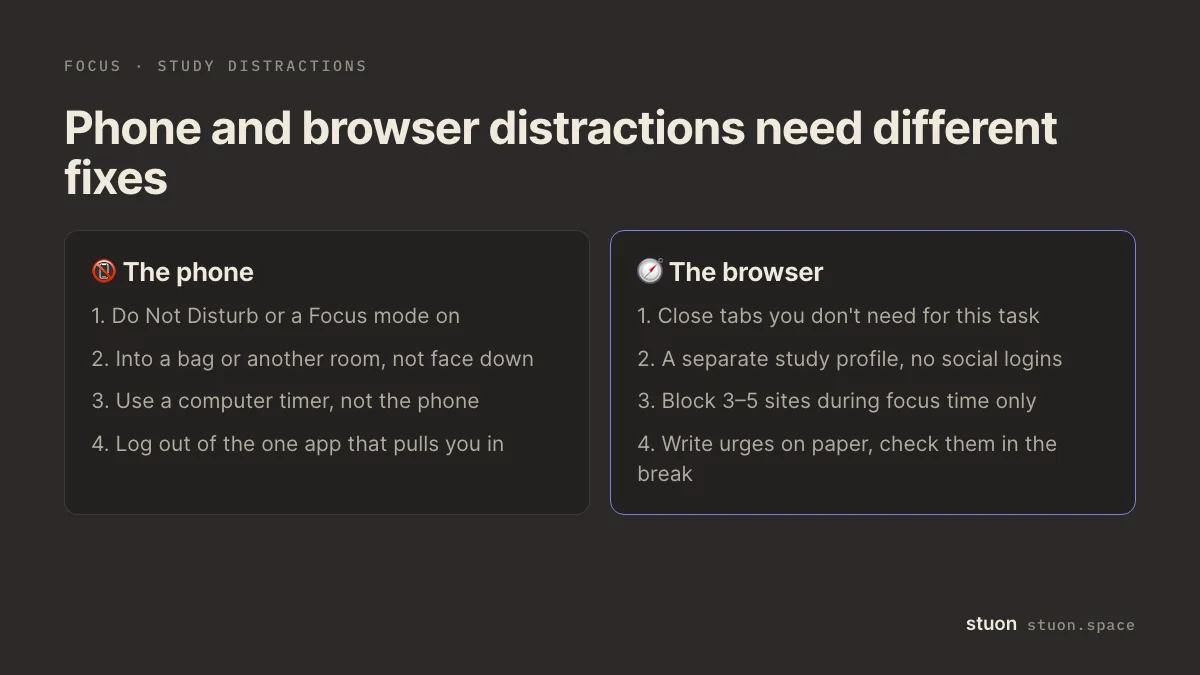 How to Stop Phone and Browser Distractions While StudyingHow to stop phone and browser tab distractions while studying: where to put your phone, how to block sites in Chrome, and what a site blocker cannot do.
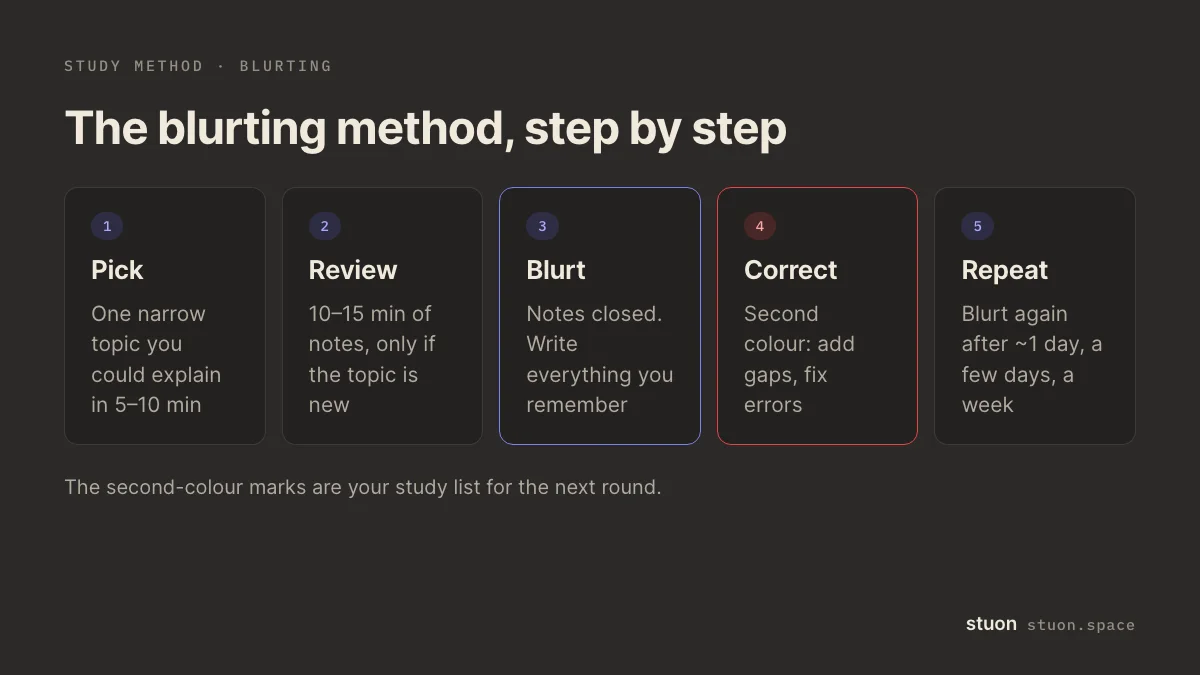 The Blurting Method, Step by Step: A Worked ExampleA step-by-step walkthrough of the blurting method with a worked example: one topic, one blank page, a correction pass and a review schedule.
 The Best Study Methods, Backed by ResearchStop cramming through textbooks passively. Spaced repetition, the Feynman technique, Pomodoro and more, ranked by the evidence behind them.
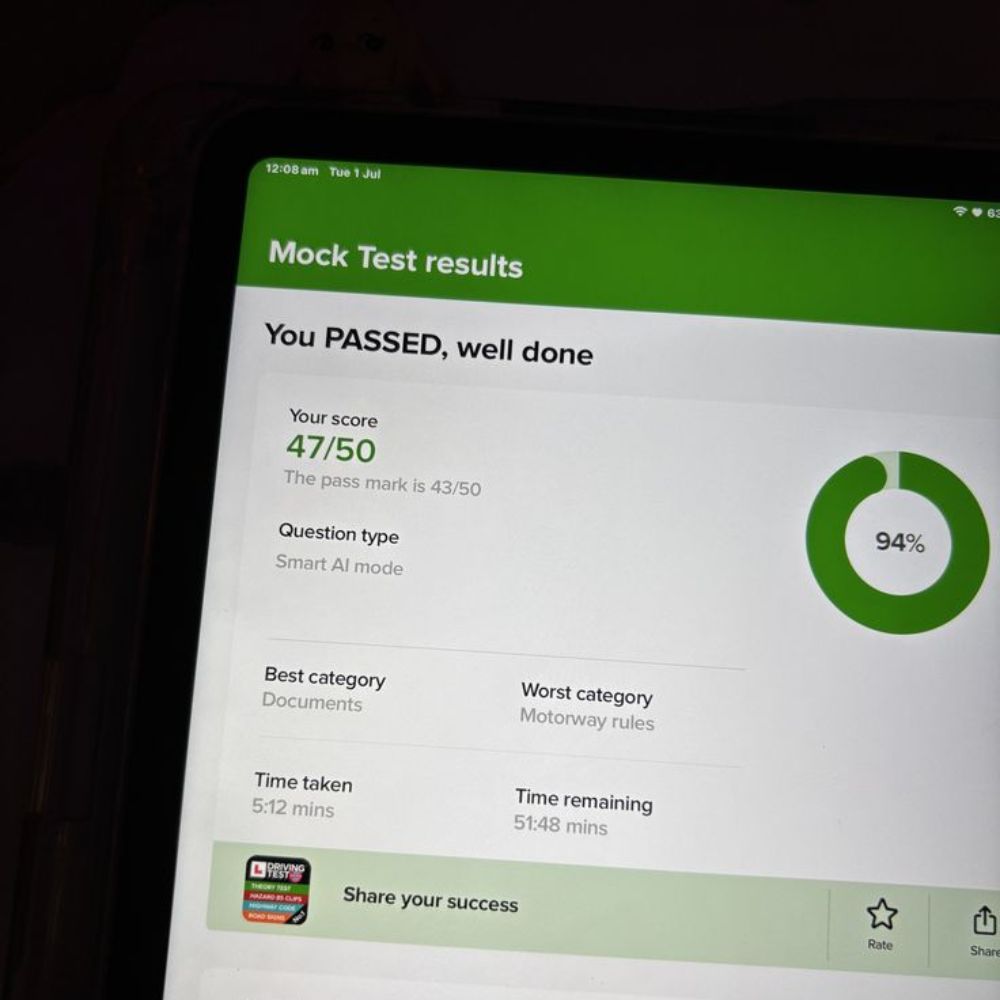 Pomodoro and Active Recall: A Composite Pre-Med ExampleA composite pre-med student shows how Pomodoro sessions, blurting and spaced review fit together. An illustrative walkthrough, not a real case.
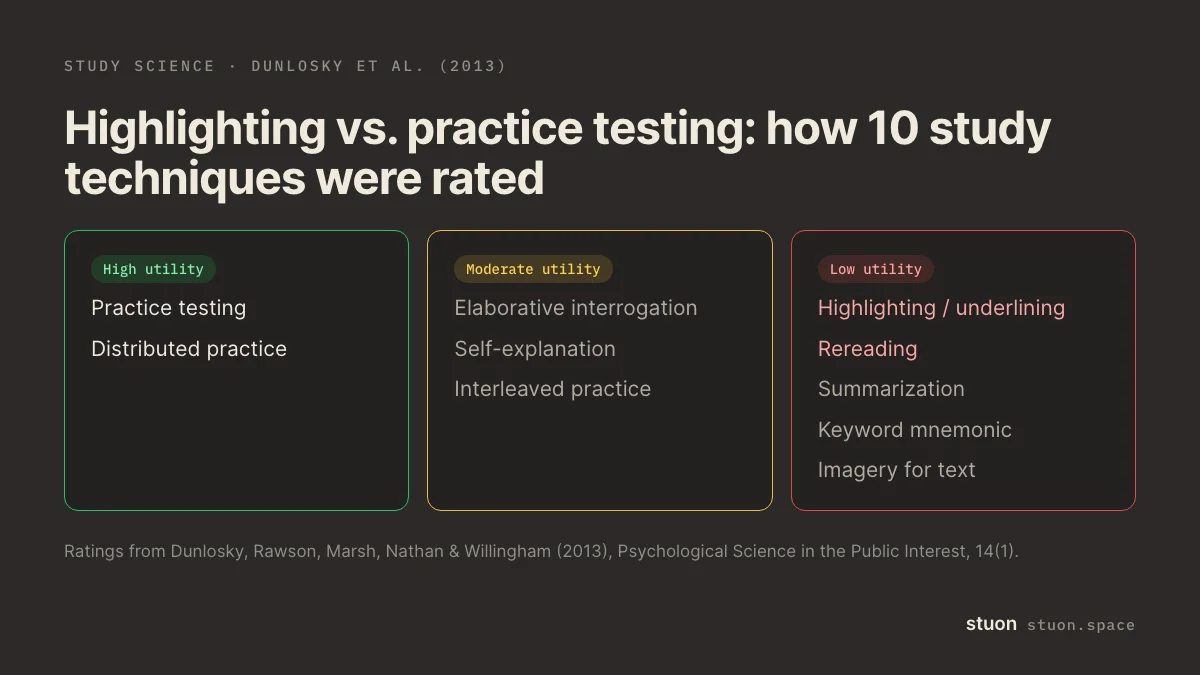 The Highlighting Trap: Why Rereading Feels Like LearningLearn why passive reading and highlighting are the least effective study methods and how to switch to active recall for better retention.
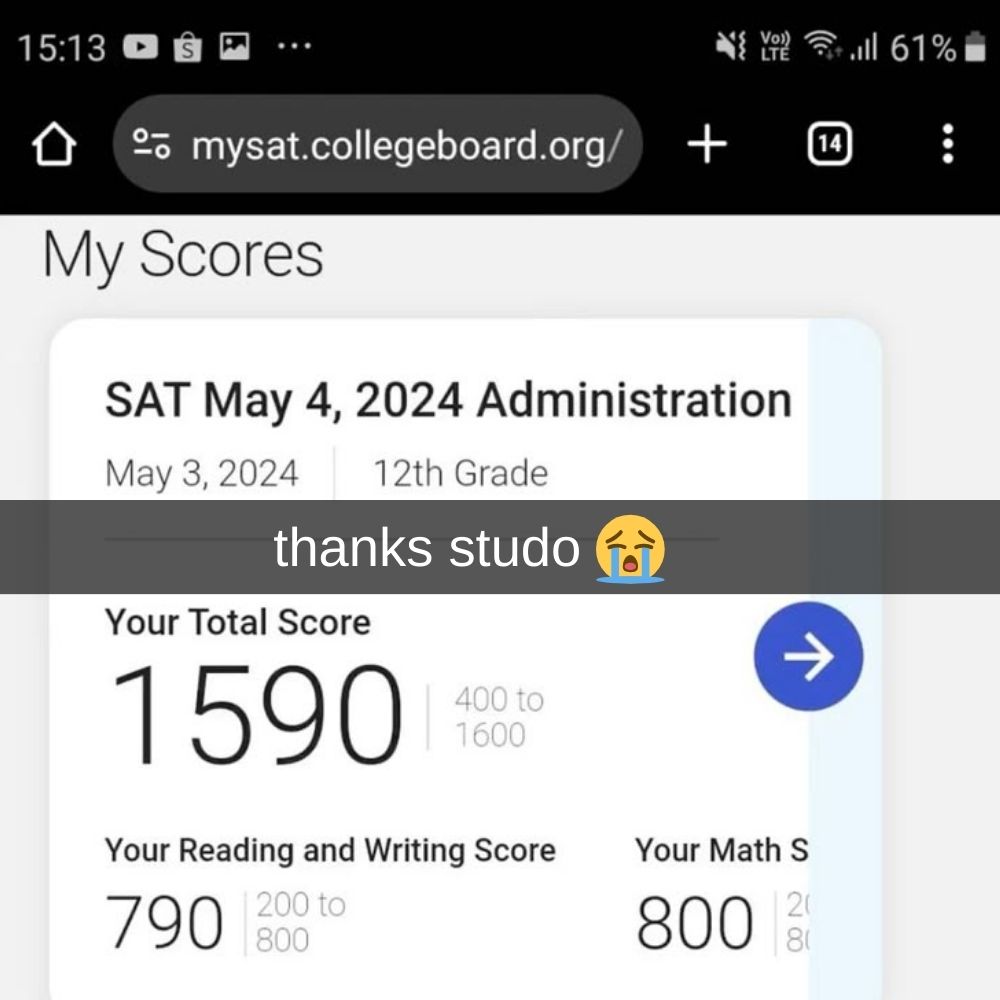 Studying in a Storm: Finding Focus When Life Is a MessA personal story about maintaining focus and academic progress during personal times of chaos and how structure can be a lifeline.
- The 4-Hour Study Day: Why More Time Doesn't Mean More GradesLearn how to achieve deep work and why shorter, more focused study days can lead to better results than long, distracted ones.
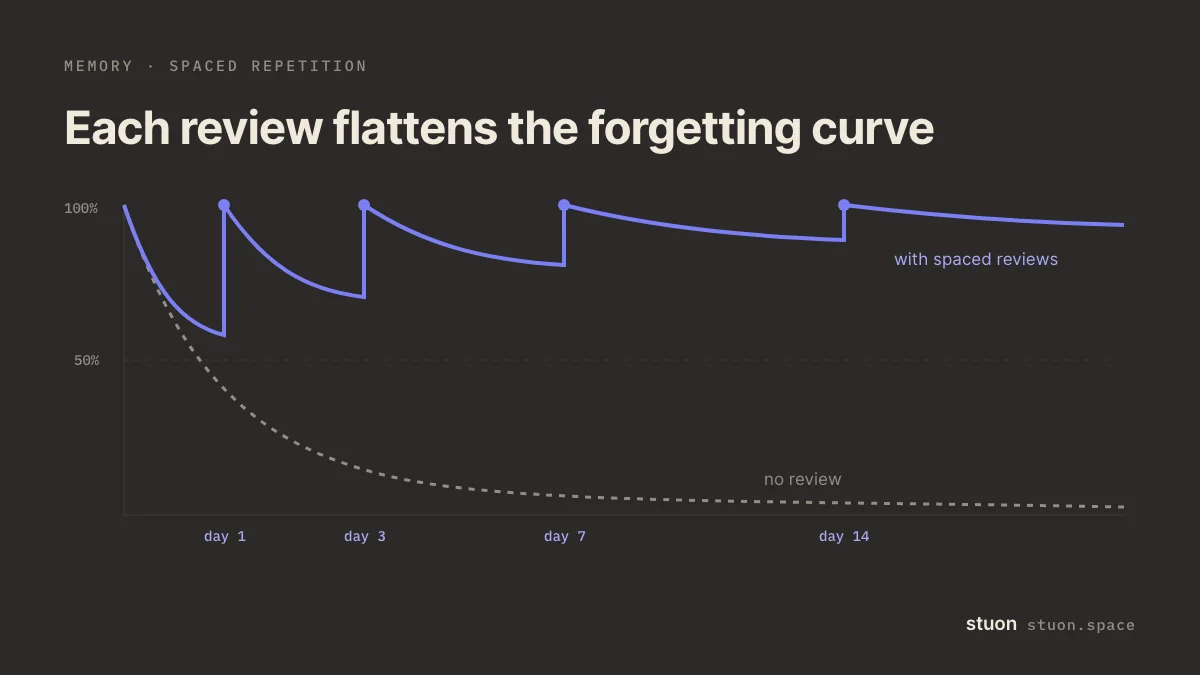 Why You Forget What You Study: Spaced Repetition ScienceWhy memory fades fast after you study, what the forgetting curve shows, and how spacing your reviews out slows forgetting. With a simple review schedule.
 An ADHD Study Routine, Shown Through a Composite ExampleA step-by-step ADHD study routine: 15-minute sprints, tiny first steps and specific goals, shown through a composite student. Not a real case.
 How to Stop Procrastinating: The 5-Minute RuleLearn the psychology of procrastination and discover the simple 5-minute rule that tricks your brain into starting tasks you are avoiding.
Frequently asked questions
What does the Stuon blog cover?
Study methods such as active recall, the blurting method, spaced repetition, the Pomodoro Technique, the Feynman Technique and interleaving, along with procrastination, focus, studying with ADHD and first-person student stories.
Who writes the Stuon blog?
Vusal Imranli, who designs and builds Stuon, writes the method guides and is the named editor for Stuon's study resources. Several articles, including the student stories, are written by other named authors. Every article shows its author and publication date.
How can I report a mistake in an article?
Send questions and corrections by email through the contact page. Factual study content is updated when its sources change; the about page explains who is responsible for it.