
Picture a first-year pre-med student. Call her Nadia. In high school she rarely studied more than an hour before a test and still did fine. At university, that stopped working. Organic chemistry, biology and physics arrived at once, and the volume was far more than rereading could handle.
She went to every lecture. She highlighted most of every chapter. She stayed late in the library. Her first exam results were still well below what she expected.
Her problem was a common one: she felt like she knew the material while reading it, and it was gone the next morning. Recognising a page is not the same as being able to rebuild it from memory. (We cover why in the highlighting trap.)
The two problems she actually had
When she listed what was going wrong, it came down to two separate things:
- Starting. A plan to "study for six hours" was so big that she put it off, then crammed in a panic.
- Remembering. The hours she did put in went into rereading and highlighting, which feel productive but give no test of recall.
Each problem needs a different tool. Timers help with starting. Retrieval helps with remembering.
Step 1: short, fixed sessions with the Pomodoro Technique
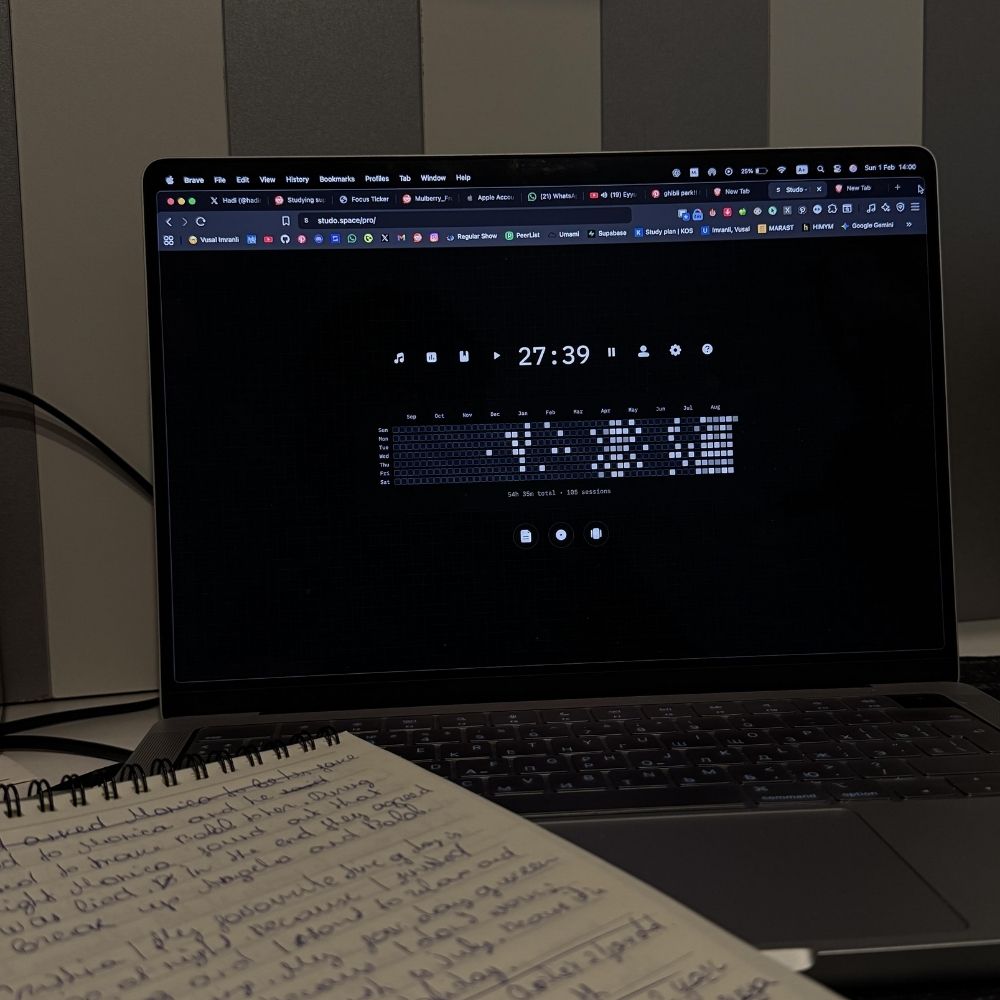
She replaced "study all afternoon" with one 25-minute session. Phone across the room. One tab open: the lecture slides. When the timer rang she stood up for five minutes and did not check messages.
A 25-minute block is small enough to start. After a few days she was regularly doing three or four sessions in a row. If you want the details of the method, our Pomodoro Technique guide covers the standard timings and when to change them. You can run the same loop in the free Pomodoro timer.
Step 2: replace rereading with blurting
Inside each session, she stopped rereading and started testing herself with the blurting method:
- Read: study one concept, such as cellular respiration, for about 10 minutes.
- Hide: close the book and the slides.
- Blurt: write every step, formula and product she can remember on a blank page.
- Correct: reopen the book and mark every gap and error in a different colour.

The first pages were mostly red. That is normal and useful: the gaps are now visible, and the next session starts with them. This is retrieval practice, which has strong support in lab and classroom studies (Roediger & Karpicke, 2006). The blurting method guide explains the technique in full, and our worked blurting example shows a complete session.
Step 3: come back on a schedule
One good blurt does not make a memory last. She brought each topic back a day later, then a few days later, then a week later, blurting it again each time. Spreading reviews out like this is called spaced practice, and it consistently beats cramming the same hours together (Cepeda et al., 2006). See spaced repetition for how to set intervals, or the science of spaced repetition for the research.
What changed, and what did not
In this example, the workload did not shrink. What changed was how her hours were spent. Sessions were shorter and had one clear job. Most of the time went into producing answers rather than reading them. Exam weeks became review weeks, not first-time learning weeks.
That pattern is the honest takeaway. We cannot promise a grade, and this character's story should not be read as evidence. The evidence is in the research on retrieval and spacing linked below. If you are on a medical track, our study guide for medical students applies the same ideas to large-volume courses.
Try it this week
- Pick one topic you will be tested on.
- Run one 25-minute session: 10 minutes reading, 10 minutes blurting, 5 minutes correcting.
- Write the date on the page. Blurt it again tomorrow and in three days.
Sources
- Roediger, H. L., & Karpicke, J. D. (2006). Test-enhanced learning: Taking memory tests improves long-term retention. Psychological Science, 17(3), 249–255. doi:10.1111/j.1467-9280.2006.01693.x
- Cepeda, N. J., Pashler, H., Vul, E., Wixted, J. T., & Rohrer, D. (2006). Distributed practice in verbal recall tasks: A review and quantitative synthesis. Psychological Bulletin, 132(3), 354–380. doi:10.1037/0033-2909.132.3.354
Frequently asked questions
How do you combine the Pomodoro Technique with active recall?
They solve different problems. In this story, 25-minute Pomodoros with the phone across the room dealt with procrastination, and the blurting method replaced highlighting and rereading: read a concept for 10 minutes, close the book, write down everything you remember, then correct it in red pen.
Why don't highlighting and rereading work?
They build familiarity instead of recall. In this story, chapters that seemed clear the night before were gone the next morning. Testing yourself on a blank page shows what you can actually retrieve.
Is it normal to get a lot wrong when you start blurting?
Yes. The first attempts in this story were covered in red ink. The struggle to remember an answer without looking is part of what makes active recall work, and the corrections shrink as you repeat it.
Related reading
Run your first session
Start a 25-minute focus session in the free study timer, then blurt what you covered on a blank page.
Open the free study timeror use the free version without an account